
-
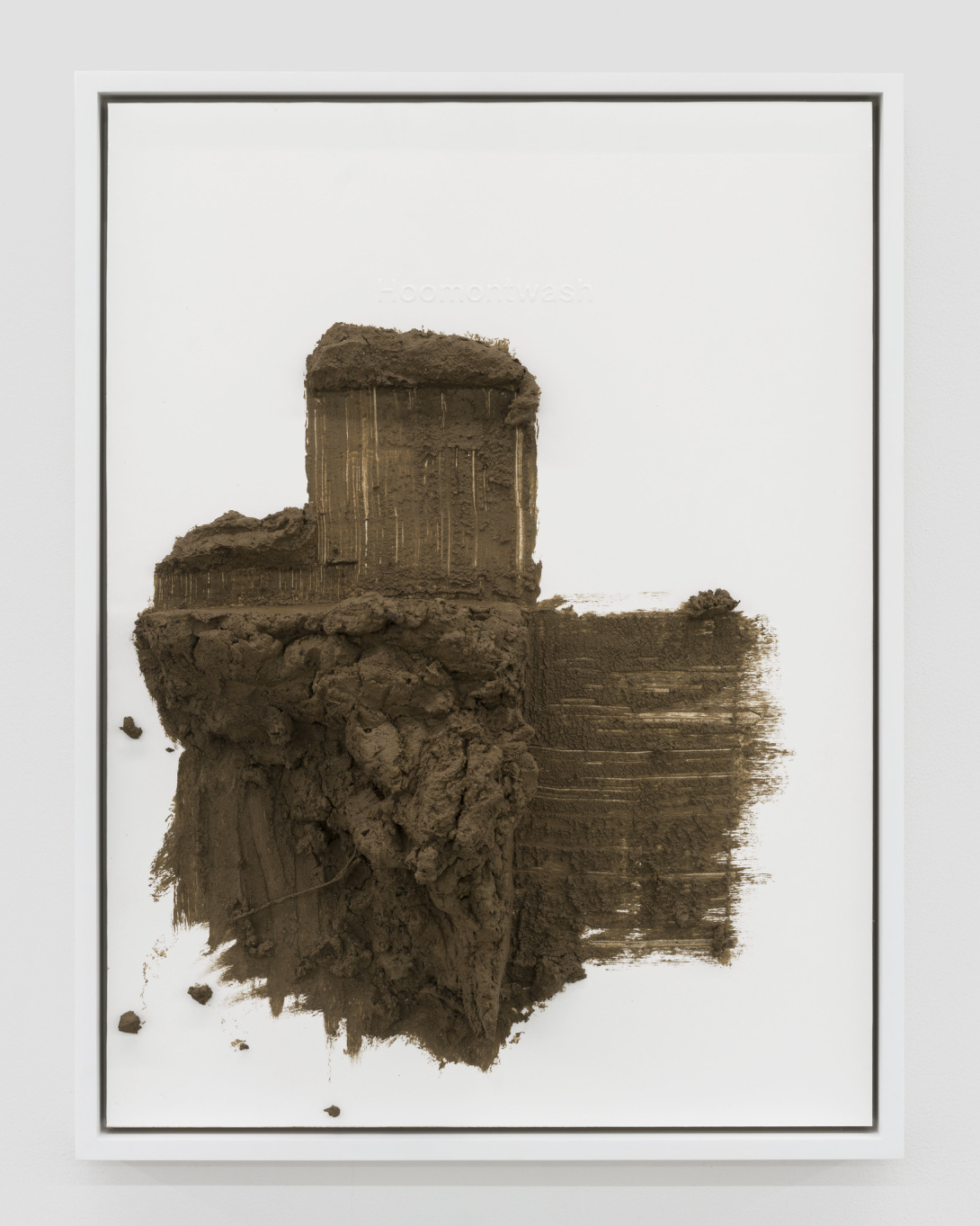
Christine Howard Sandoval, Phonological Sketch I, 2024. Adobe on blind embossed paper mounted to panel, 23-3/4 x 17-3/4 x 5 inches. Image courtesy of parrasch heijnen, Los Angeles. © Christine Howard Sandoval. Photo by Ed Mumford.
-

Christine Howard Sandoval, detail of work in progress, 2025. Image courtesy of the artist.
The San José Museum of Art (SJMA) presents Christine Howard Sandoval: Move the Plot, on view from April 10 through October 18, 2026. This solo exhibition brings together sculpture, drawing, and large-scale installation to examine the layered histories and forms of knowledge embedded in California’s wetlands. Featuring a new body of work focused on the Bay Area and Central Valley marshes, the exhibition foregrounds landscapes shaped by centuries of Indigenous stewardship, colonial intervention, and modern engineering.
Working with land-based materials such as adobe and medicinal plant dyes, alongside modular steel structures, Howard Sandoval (Chalon Nation) investigates how archives, architecture, and ecological systems register histories of Indigenous resistance and survival. These traces are set in tension with the technologies that radically transformed California’s wetlands following US occupation in the mid-nineteenth century.
“At SJMA, we are committed to exhibitions that respond to the specific histories and conditions of our region,” said Juan Omar Rodriguez, assistant curator at SJMA and curator of the exhibition. “As California faces an urgent reckoning with climate change and wetlands restoration, Move the Plot reminds us that our relationships to land are neither fixed nor inevitable, and that Indigenous knowledge systems and histories remain essential to understanding these landscapes today.”
Move the Plot marks a homecoming for the artist, who grew up in San José. Over the past decade, Howard Sandoval has developed a research-driven practice attentive to the fragility of both land and historical memory. Adobe, a sun and air-dried mixture of earth, water, organic matter, and time plays a central role in the exhibition. Embracing its tendency to crack, shed, and erode, the artist treats adobe as a living material that resists permanence and challenges conventional models of preservation within museums and archives.
Her research has included fieldwork with the Amah Mutsun Relearning Program at the UC Santa Cruz Arboretum, archival study at the Bancroft Library, and participation in the Chalon Nation’s language revitalization initiatives through UC Berkeley’s Breath of Life Archival Institute for Indigenous California Languages. These parallel lines of inquiry seek to reconnect land-based cultural practices that were systematically suppressed even as they were carefully recorded within colonial archives.
For centuries, California’s wetlands have provided food, weaving materials, and construction resources for Indigenous communities across the region. During Spanish colonization, these marshes played a critical role as sites of refuge for Indigenous peoples escaping the mission system and colonial militias.
Howard Sandoval’s new “diagrammatic sculptures” reference the technological and bureaucratic systems that enabled the drainage of California’s extensive waterways and subsequent dispossession of land. These works include adobe casts that replicate levee and ditch forms held by modular steel armatures, alongside graphite drawings in which rigid grids are interrupted by gestural earthen forms. The exhibition also features The First Color Is Red, a monumental installation of embossed paper dyed with locally sourced medicinal plants and inscribed with texts assembled from Indigenous accounts of matrilineal resistance, healing practices, and linguistic knowledge.
“The San José Museum of Art has been working for years to increase the environmental sustainability of our practices,” said Oshman director and CEO Jeremiah Matthew Davis. "This process involves learning from a multitude of sources, including local Indigenous knowledge of land and water stewardship. Howard Sandoval’s work reminds us of how knowledge can be stored and transmitted through our environments, then translated and communicated through artistic practice. We’re thrilled to share this timely exhibition with our audiences.”Move the Plot invites viewers to imagine alternative stories about California’s past, present, and future. In foregrounding Indigenous knowledge and land-based practices, the exhibition asserts that there have been, and still can be, other ways of living with the land.
Christine Howard Sandoval: Move the Plot is organized by Juan Omar Rodriguez, assistant curator, San José Museum of Art.
Programming
Opening Celebration
Friday, April 10, 2026, 6–9pm • $5 after 5pm (Free for members)
sjmusart.org/opening
Artist Bio
Born in 1975 in Anaheim, CA, Vancouver-based Christine Howard Sandoval is a multidisciplinary artist who questions the boundaries of representation, access, and habitation, where what is held in the land and what is held within state sponsored archives negotiate shared spaces of meaning. Howard Sandoval is an enrolled member of the Chalon Nation in Bakersfield. She is an Assistant Professor of Interdisciplinary Praxis in the Audain Faculty of Art at Emily Carr University and holds an MFA from Parsons School of Design (2013) and a BFA from Pratt Institute (2005). Recent solo exhibitions include Coming Home, Institute of Contemporary Art San Diego, CA (2021); A wall is a shadow on the land, Contemporary Art Gallery, Vancouver, Canada (2021); Timelines for the Future, Oregon Contemporary, Portland, OR (2021); and Channel, Colorado Springs Fine Art Center, CO (2019). She has exhibited nationally and internationally in group exhibitions including Ways of Knowing, Walker Art Center, Minneapolis, MN (2025); the 12th Seoul Mediacity Biennial, South Korea (2023); New Ecologies, Clark Art Institute, Amherst, MA (2023); Livestream, Museo de Arte Contemporáneo de la Universidad de São Paulo, Brazil (2022); American Domain, The Museum of Capitalism, Oakland, CA (2017); Prototype, An Exhibition in the Cloud, Designtransfer, Universität der Künste Berlin, Germany (2013); and Superreal: Alternative Realities in Photography and New Media, El Museo Del Barrio, New York, NY (2013), among others.
Howard Sandoval has been awarded numerous fellowships and residencies including the Headlands Center for the Arts residency (2024); a Natural Sciences and Engineering Research Council of Canada EDI Capacity Building Award from Emily Carr University, Vancouver, Canada (2022); and an Artist Grant from the Sustainable Arts Foundation, San Francisco (2021). Her work can be found in the collections of the San José Museum of Art, CA; Hammer Museum, Los Angeles, CA; Museum of Contemporary Art San Diego, CA; and Forge Project, NY."
Support
Christine Howard Sandoval: Move the Plot is made possible by the SJMA Exhibitions Fund, with major support from Brook Hartzell and Tad Freese.
San Jose Museum of Art
The San José Museum of Art (SJMA) is a modern and contemporary art museum dedicated to inclusivity, new thinking, and visionary ideas. Founded in 1969 by artists and community leaders, SJMA’s exhibitions, collection, and programs reflect the defining characteristics of San José and Silicon Valley—from its rich cultural diversity to its innovative spirit. The Museum offers lifelong learning opportunities for schoolchildren and educators, multigenerational families, creative adults, university students and faculty, and community groups. SJMA is committed to being a museum without borders, essential to creative life throughout the diverse communities of San José and beyond.
SJMA is located at 110 South Market Street in downtown San José, California. The Museum is open Thursday 4–9pm; Friday 11am–9pm; and Saturday–Sunday 11am–6pm. Admission is $20 for adults, $15 for seniors, and free for members, college students, youth and children ages 17 and under, and school teachers with valid ID. Admission is free from 6–9pm on the first Friday of every month. For up-to-date information, call 408.271.6840 or visit SanJoseMuseumofArt.org.